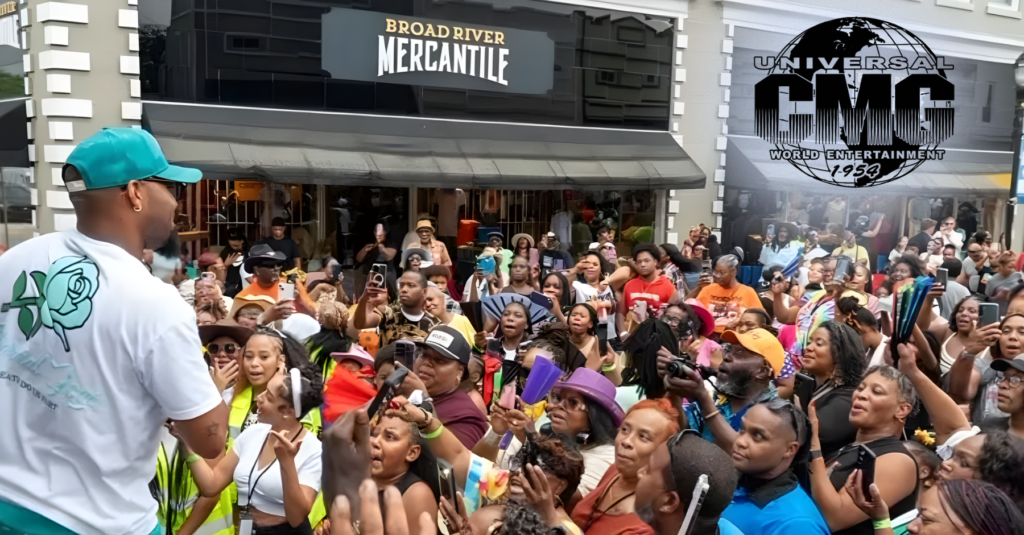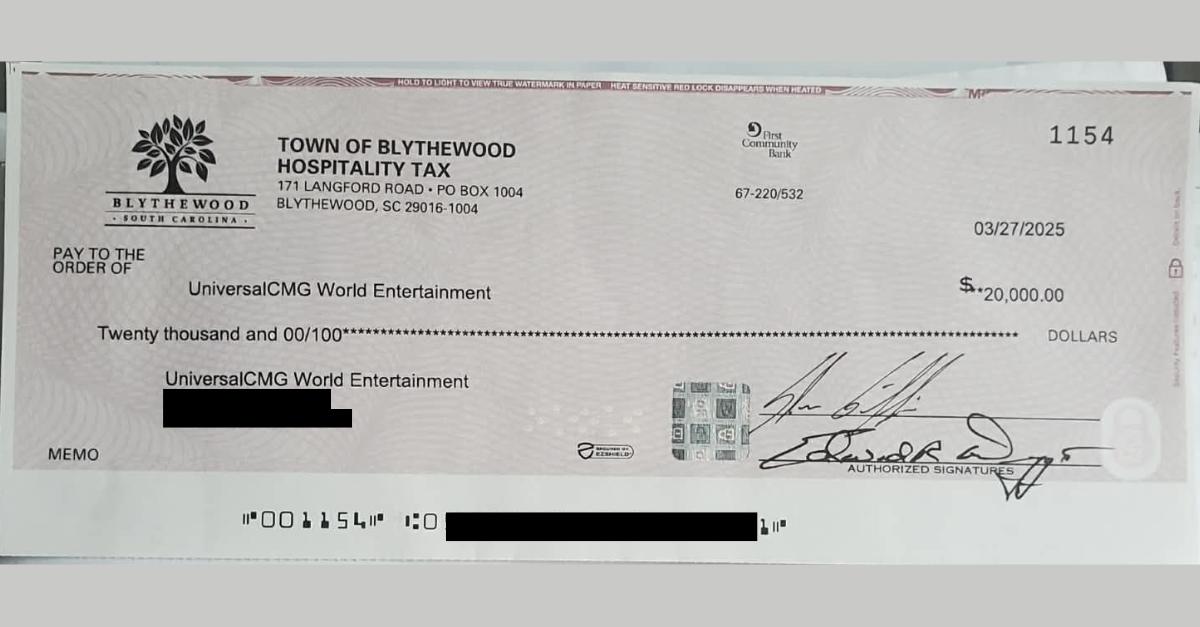
Through our investigation, Blythewood Now began looking deeper into what has now become one of the most talked-about and least clearly explained situations in town.
Along the way, we were able to locate Mr. Edward Straiter. Contrary to what some might believe, he isn’t hard to find. He isn’t hidden. And he certainly isn’t unfamiliar to this community.
In fact, he’s the same Edward Straiter many in Blythewood knew well when he operated the Movie Gallery right here in town, located at 710 University Village Drive, for those who remember.
Which makes the current confusion interesting.
Because while there seems to be a growing narrative suggesting uncertainty about who he is, there was a time, not too long ago, when that same question didn’t exist.
At the same time, our investigation led us to something else.
The check.
The $20,000 check that has been referenced, questioned, and in some cases treated like the smoking gun in this entire situation.
After weeks of what could only be described as a highly coordinated, stealth-like investigation, complete with advanced surveillance techniques, investigative gadgets, and what some might assume was a CIA-approved level of operational precision, we were able to obtain it.
The smoking gun.
Or, in more practical terms, we picked up the phone, made a call, and asked for a copy.
And just like that, the mystery surrounding the check became a lot less mysterious.
Which made Monday night’s council meeting all the more interesting, because while the questions continued, some of the answers didn’t require much searching at all.
And that’s what makes moments like this worth pausing on. Not just to react, but to take a step back, look at the full picture, and ask a more complete set of questions.
After taking a deeper look into this matter, reviewing available records, being given the opportunity to examine documentation from UniversalCMG, and speaking directly with Edward Straiter, and following Monday night’s council meeting, the situation became clearer.
Not simpler. But clearer.
And with that clarity, Blythewood Now made the decision to put those observations into writing.
Mayor Griffin, this is an open letter.
An Open Letter — In the Interest of Clarity and Accountability
Mayor Griffin,
Like many in the community, I watched Monday night’s council meeting.
And before we even get into checks, accusations, or narratives, there’s something that needs to be said first.
Thank you.
Thank you for being the adult in the room.
Because what we witnessed wasn’t leadership at its best. It wasn’t professionalism.
At times, it felt more like a group of angry pre-teens upset with their father because he got rid of the family dog after they failed to take care of it as they promised.
That’s what it sounded like.
And while that may be uncomfortable to say, it’s not inaccurate.
Blythewood Town Council has, fairly or unfairly, developed a reputation, not just locally but beyond, for this kind of dysfunction.
People are watching. And yes… people are talking.
So in the middle of that, your composure mattered.
You didn’t match tone. You didn’t escalate. You stayed steady.
And that matters more than people realize.
Now, there were a lot of accusations made. A lot of questions asked. But not all questions carry the same weight.
As my grandfather used to say, the basic truth of anything is who a person is. Not what they say in a moment. Not what they claim when it’s convenient.
Who they are.
And when someone has already shown a willingness to be untruthful about who they are, to misrepresent their credentials and reshape their experience for personal gain, then their credibility becomes a question. And when credibility becomes a question, so do the accusations.
That’s not avoiding accountability. That’s understanding who you’re dealing with.
And while others may choose to talk, accuse, and speculate, it’s worth remembering something else.
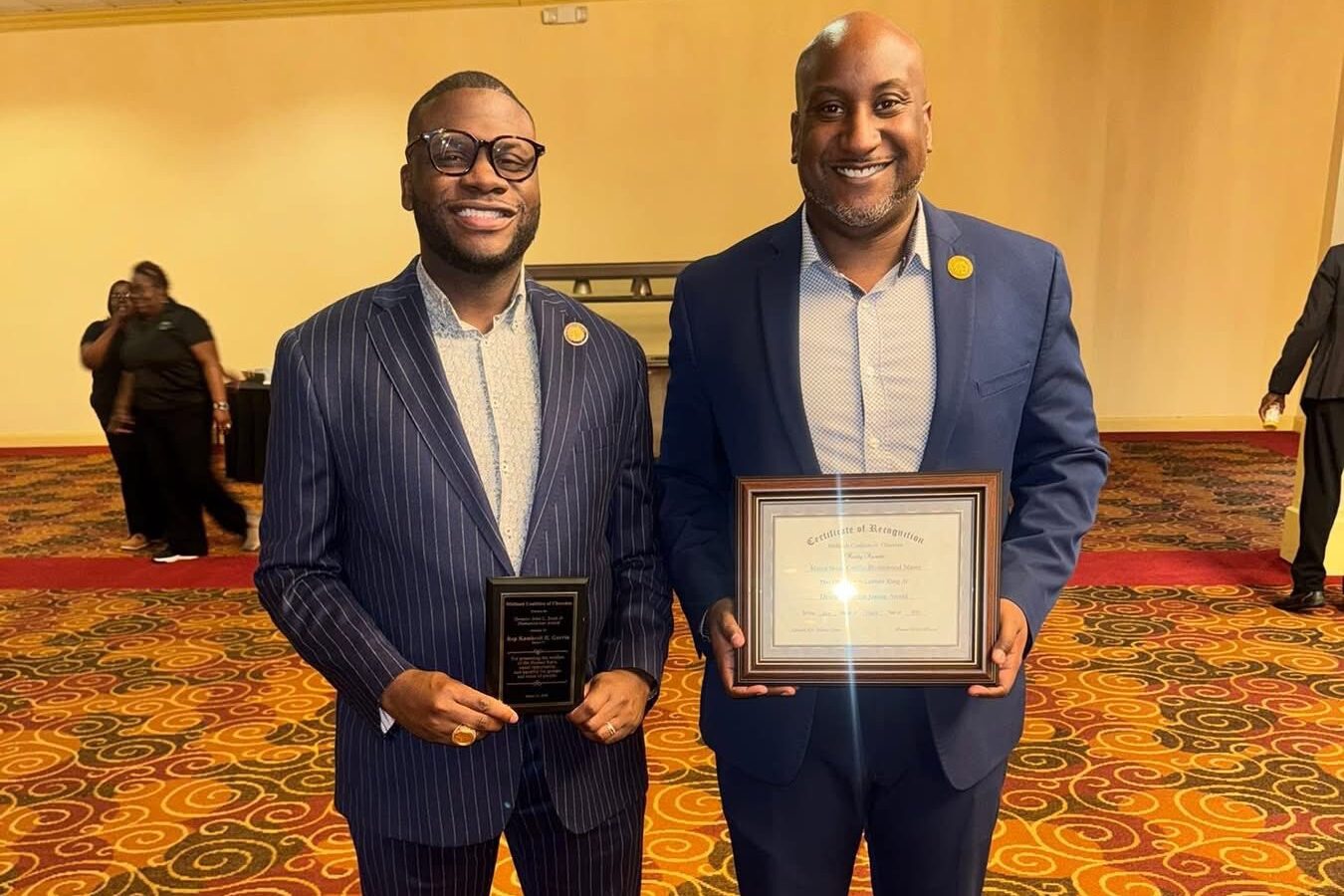
You were recently recognized by the Midlands Coalition of Churches with the Dr. Martin Luther King Jr. Drum Major for Justice Award.
That’s not a small recognition. And it’s not handed out lightly.
It speaks to service. It speaks to consistency. It speaks to character.
And Monday night, whether people want to acknowledge it or not, you showed exactly why you received it.
Because leadership isn’t just about decisions. It’s about discipline. It’s about restraint. It’s about knowing when not to engage.
So while others may raise their voices, you’ve already been recognized for your work.
And that distinction matters more than the noise.
This Was Never Just About a Check — And What’s Being Overlooked
And Mr. Mayor, there’s another part of this that deserves your attention.
Because while words like “theft” and “stealing” have been used freely, and more than once, there’s something that hasn’t been said nearly as often.
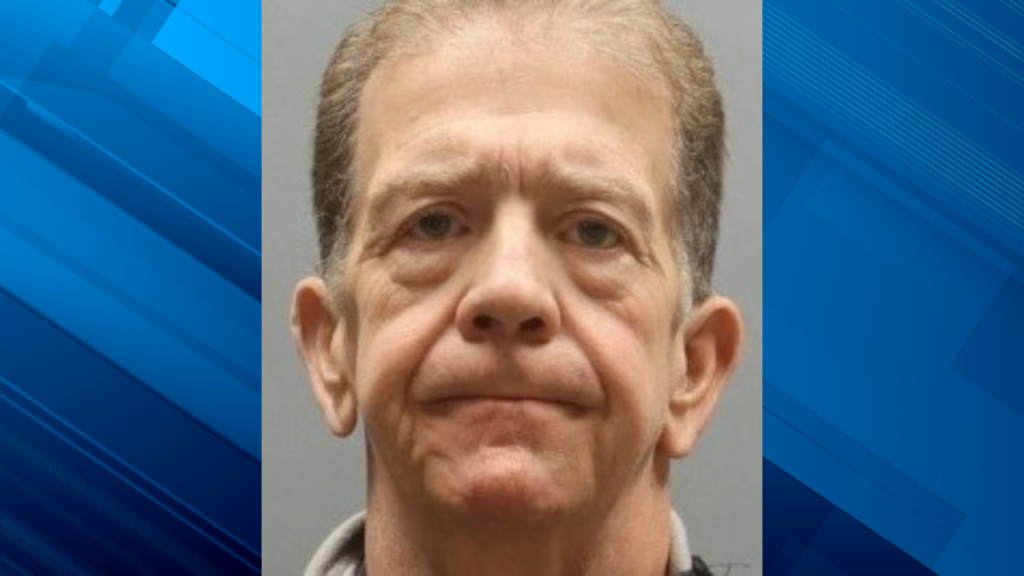
The only person actually arrested in connection with wrongdoing tied to Doko Manor was Frederick William Layman, a white male, charged with obtaining property under false pretenses.
That’s not speculation. That’s fact.
And yet, somehow, that name doesn’t come up in conversation. Instead, what we continue to hear, loudly and repeatedly, are accusations directed at you and at another African American elected official.
No charges. No arrest. Just language.
And that’s where the concern starts to grow.
Because when you step back and look at it, not one instance, but several, a pattern begins to form. African American men being labeled, implied, or associated with wrongdoing, while similar allegations involving white males do not seem to generate the same urgency, the same language, or the same level of scrutiny.
Now add another layer.
Edward Straiter is also an African American male. The event in question is a Juneteenth celebration. A cultural event.
And the loudest narrative shaping this situation is coming from a publication whose diversity does not reflect the community it reports on.
At some point, Mr. Mayor, it becomes fair to ask:
Is this just a coincidence?
Or is this something else?
Now to be clear, this isn’t an accusation. But it is an observation. And it is a question.
Because when a pattern starts to take shape, ignoring it doesn’t make it disappear. It just allows it to continue.
And from where we’re standing, there are enough pieces here to warrant a closer look. Not just at the check, but at everything surrounding it.
Now let’s deal with what actually happened.
Because somewhere along the way, this conversation was reduced to a check. A number. A signature.
But this wasn’t random money. This was tied to a Juneteenth event. A cultural event. One that was planned, organized, and already in motion. Work had been done. Deposits had been made. Services had been secured.
Then the Town made a decision.
The Town canceled events at Doko Manor. Not you. The Town.
And when that decision was made, it didn’t just cancel a date. It disrupted obligations that were already in place.
The event didn’t disappear. It moved. To Chester, South Carolina, where it was successfully held and drew over 1,500 people, with the specific purpose of making sure Blythewood residents could still participate.
So now the question isn’t just about one check. It’s about everything that came after that decision.
What process did the Town put in place when it chose to cancel all events? What communication went out? Where are the emails to vendors, organizers, and residents who had events scheduled? What did that process look like?
Because this wasn’t the only event. There were others.
Were refunds issued? Were deposits returned? Was the Town owed money? Or did the Town owe others?
Those questions don’t stop at one organization. They apply to everyone affected. And they deserve answers from everyone.
Because there were two signatures on that check. Two.
Which means responsibility doesn’t sit in one place.
So the question becomes just as important as the answer. Why is only one signature being questioned? Why is only one person being asked to account for a process that clearly involved more than one?
Where is the accountability for the second signature? And where are the questions for the individuals responsible for carrying out the Town’s decision after the cancellation?
Because accountability doesn’t work if it only moves in one direction.
Now, there has also been discussion about whether a for-profit organization should have received these funds. But the law is clear.
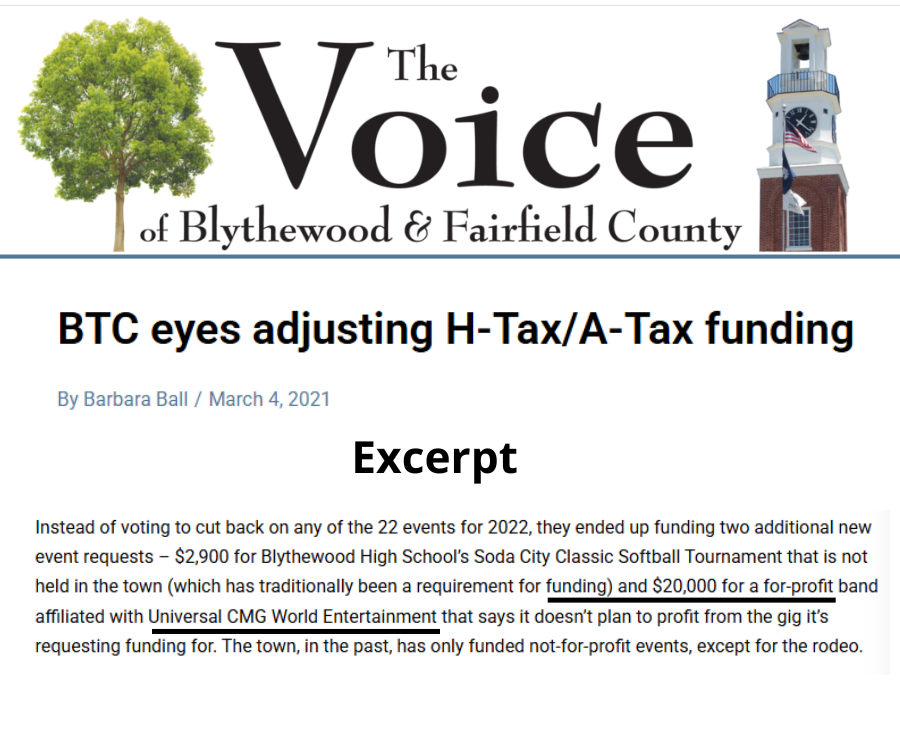
Under South Carolina Code § 6-1-730, the restriction is not on who receives the funds. It is on how the funds are used. If the purpose is tourism, cultural events, and attracting visitors, then the use is permissible.
And this wasn’t a random organization. UniversalCMG had already been approved in prior years. This wasn’t new. This wasn’t an unverified organization.
So again, the conversation shifts. Not to whether it should have happened, but to how everything was handled once it did.
Mr. Mayor, you voted not to cancel those events. The council made that decision.
So now the question becomes simple.
Where is the record of that decision being carried out? Where is the communication? Where is the documentation that shows how this was handled once the decision was made?
Because if we are going to talk about accountability, then we need to talk about all of it. Not part of it. Not the convenient part. All of it.
Blythewood Now will be submitting a FOIA request to obtain those records.
Because at this point, the real question is no longer where the money went.
The real question is this.
There were two names on that check.
So what makes one above suspicion… and the other the preferred suspect?
With an entire process behind it and multiple people involved, what makes one name the target and the other untouchable?
Respectfully,
Blythewood Now